
 东盟头条APP移动端
  APP下载
APP下载  移动wap端浏览
 “A song becomes a home for the hearts that share it.” A resounding voice breaks forth from the deep mountains of Dahua Yao Autonomous County in Hechi, Guangxi. The Shouting Song, a centuries-old chant of the Gongnui Yao people, carries the memories of millennia as it reverberates across the valleys, sending the cultural codes of the Yao people far beyond their homeland.

Recently, the “Drums and Songs, Beautiful Hechi — 2025 Overseas Media Tour in Hechi,” guided by China News Service Guangxi Branch and hosted by the Publicity Department of the CPC Hechi Municipal Committee, arrived in Dahua. Representatives from 21 overseas media outlets from 15 countries and regions, including Thailand and Cambodia, were given the chance to listen to this ancient song, which originated in the Yao people’s Waibo Festival sacrificial rituals. The Shouting Song blends a powerful, unadorned vocal timbre with layered harmonies, vividly recreating solemn and sacred ceremonial scenes and demonstrating its unique artistic charm.
The Gongnui Yao are a subgroup of the Yao ethnic group, mainly living in Jiangnan Township of Dahua County.
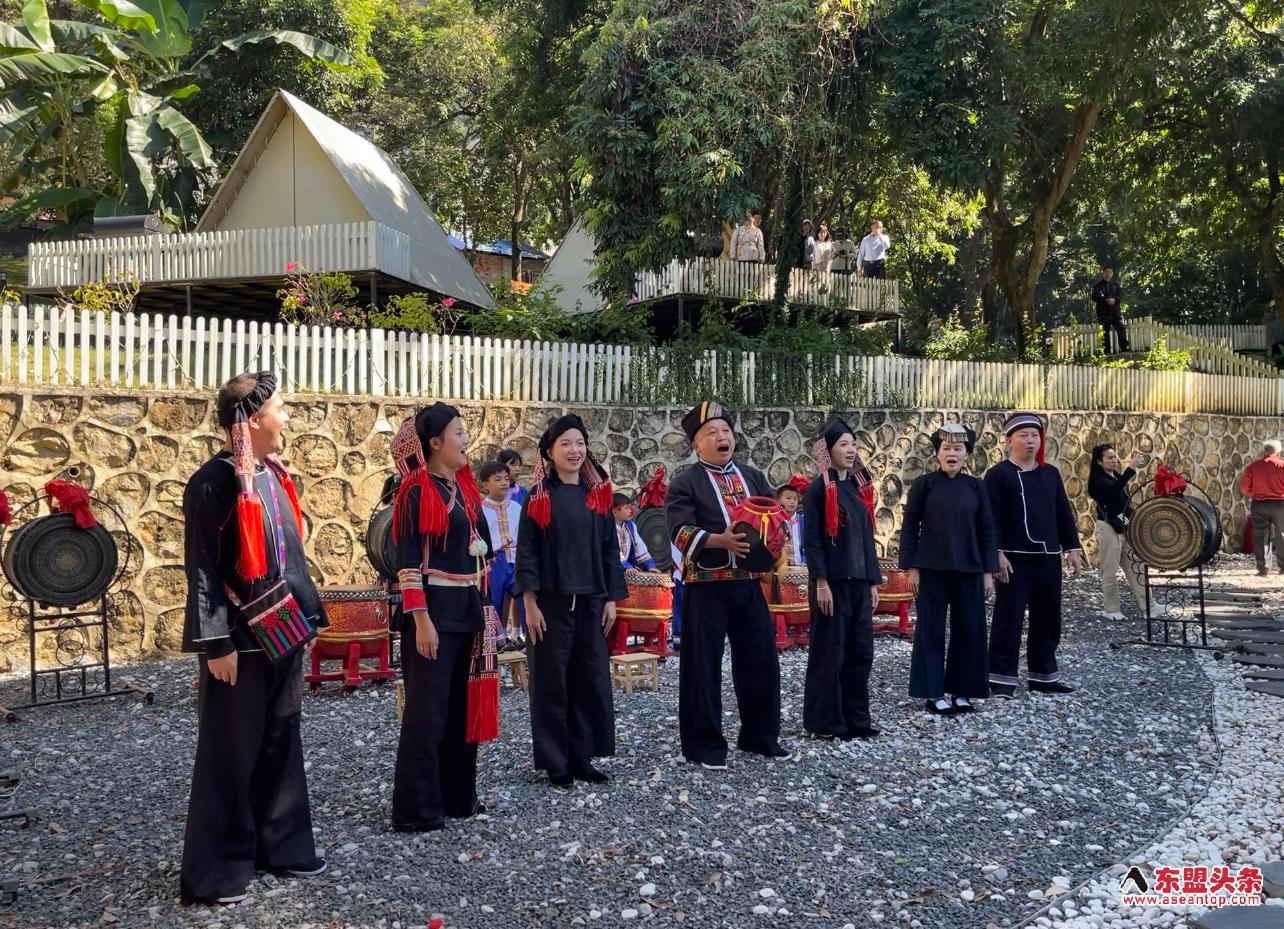
Lu Guifeng, Deputy Township Head of Jiangnan Township and a Gongnui Yao ballad inheritor, together with his wife Lan Liujiao and five companions, presented this cultural treasure to the visiting guests. Brought together by their shared love for the Shouting Song, Lu and Lan not only became partners in life but also co-guardians of the tradition. “I squeeze out every minute I can spare — it has taken up nearly all of my rest time,” Lu admitted. Outside his official duties, nearly all his hours are devoted to inheritance and practice. For Lan, also a bearer of the tradition, this is not just her husband’s mission but their shared journey.
“You’re on that mountain, and I’m on this one — if you don’t shout, you can’t hear each other.”
With this, Lu explained the simplest origin of the Shouting Song. For the Yao ancestors, the chant was not only a form of art but also a vital part of daily life — calling to one another while working on the mountains, guiding children, or expressing emotions. Its distinctive projection technique created the song’s soaring, far-reaching quality, making it a unique artistic dialogue between humans and nature.
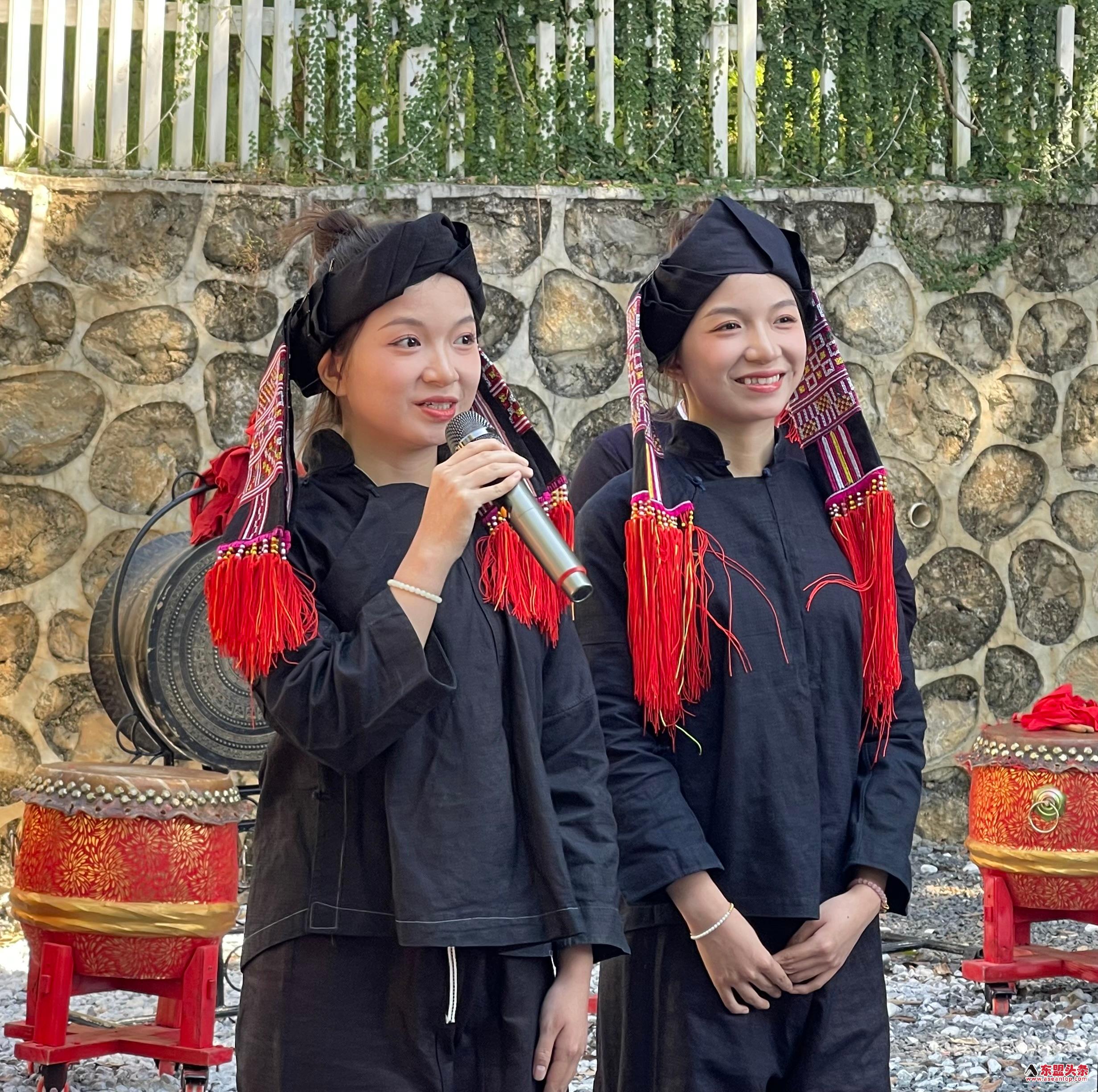
The path of inheritance has welcomed fresh energy with the arrival of Zhuang twin sisters born after 2000 — Meng Tengfei and Qin Shuangfei. When they first heard the Shouting Song during a field trip in Jiangnan Township last year, they were completely struck. “We had never heard anything like it — we loved it instantly,” Meng recalled.
But learning it was no easy task. The twists of the Yao language and the song’s exceptionally high vocal register demanded immense effort. “You really have to shout — and shout too much, your voice goes hoarse,” Qin said.
Encouragingly, the sisters began integrating Zhuang language elements into the Yao Shouting Song, creating a natural fusion of Zhuang and Yao cultures. “Many Zhuang and Yao families are now intermarried, and our cultures are merging. As Zhuang people, we can also pass on Yao traditions,” Meng said.
The revival of the Gongnui Yao ballads took on new momentum thanks to one person — Zheng Tianxiong, Vice Chairman of the Guangxi Folk Literature and Art Association and President of the Guangxi Mountain Songs Society. After hearing the Shouting Song during a field visit, he was moved by its uniqueness and helped establish a professional intangible cultural heritage team. Today, the team, composed of Yao inheritors, Zhuang vocalists, and professional performing arts troupes, preserves the essence of tradition while infusing modern creativity, breathing new life into the ancient art form.
In today’s Dahua mountains, the once-common scene of villagers calling to one another across valleys has faded with the opening of paved roads to every village. Yet through new forms of performance and transmission, the Shouting Song is flourishing once again. Local schools are also introducing Gongnui Yao ballads into campus programs to strengthen heritage education.
Under Lu Guifeng’s guidance, Meng and Qin have been studying the Shouting Song in depth. They travel widely to participate in competitions and performances, eventually joining their team in performing on the stage of the National Centre for the Performing Arts in Beijing.
Now working as instructors at a training institution in Dahua, the twin sisters hope to “bring the Shouting Songinto the classroom and teach it to more people.”
Lu Guifeng noted that in Gongcha Tun of Longqiu Village, Jiangnan Township, where he lives, about one-third of the village’s 450 residents can sing the Shouting Song. He hopes that this millennium-old Yao chant, carried forward by a new generation of inheritors, will rise from the valleys of Dahua and travel toward a wider world.
评论0文明上网理性发言,请遵守《新闻评论服务协议》