
 东盟头条APP移动端
  APP下载
APP下载  移动wap端浏览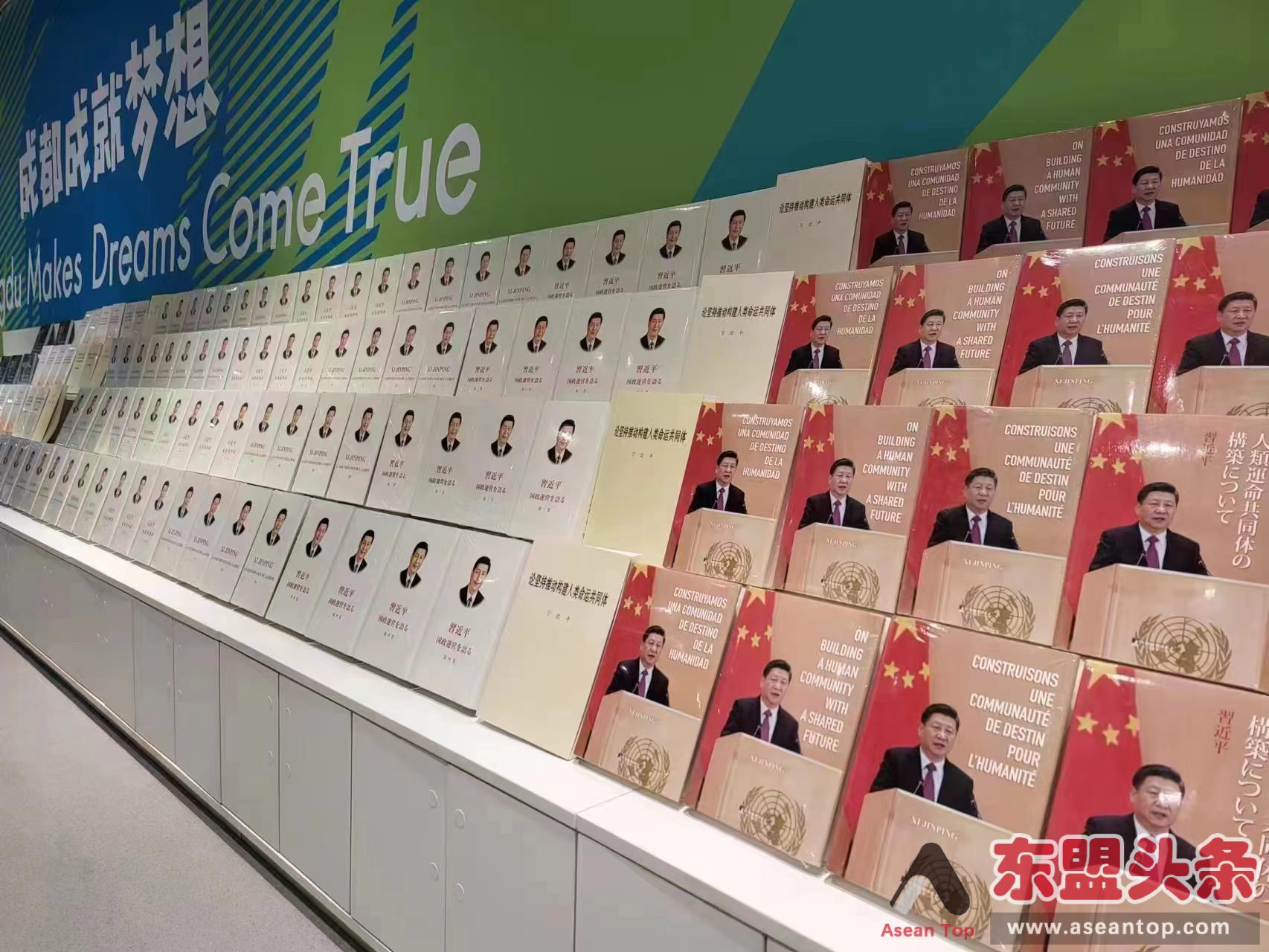
Xi Jinping: The Governance of China
First, of course, this is my second time to China. I was here during 2008-2010, so I have several very pleasant memories. For instance, I was here…two significant memories. One is the very impressive Olympics that were held by China. I have yet to see such a splendid and very well-organized Olympics.
So that's a memory I that I still carry to date. The second is, I was here and during that time, during those two years, we had several very high-level leadership visits to China. And I think I was able to work in the team at the time with the ambassador and other colleagues in the embassy. Those visits helped to further cement our bilateral relationship. That was my modest contribution in the bilateral relationship between our two countries.
Beijing is a very busy place and there is so much to do. There is so much to observe. There is so much to contribute. At a personal level, I think what I would like to do is to continue or play my role in terms of building bridges, the connectivity connecting people, connecting cultures, connecting ideas, economies, societies.
It's a huge task, but at whatever time is available from so many things, I think it is the cultural side, people-to-people side that I would like to work on.
When I look back, when I was there 15 years ago, and now there is, again, in our bilateral relationship, also, I think, similar positive change, which I describe what I have seen in China. I think in many ways, this positive change is also visible in our bilateral relationship. The biggest change is the introduction and implementation of the Belt and Road Initiative (BRI) that came in 2013.
And now this year is the 10th anniversary of the Belt and Road Initiative. As we know that China-Pakistan Economic Corridor is the flagship project of BRI. It is also the 10th anniversary of the CPEC (China-Pakistan Economic Corridor).
On the economic corridor, I think all these four areas that work is ongoing. The economic side of it, of course, it is an economic corridor, but also the social aspect of it, because as a result of the high-quality development work, a lot of jobs have been created.
For instance, I know in the last 10 years, 236,000 jobs have been created, 8,000 megawatts of electricity has been generated.There are many other aspects, but the point is that it has helped improve the living standards of people. That's the social side of it.The economic side of it is the energy projects, the infrastructure projects, the transport projects. Also on the environmental side, I think there is a lot of focus on the environmentally sound projects.And technology is also an important component of China economic corridor, our bilateral relationship.
We have an excellent foundation, and that foundation has many dimensions or manifestations. For instance, there is a very high-level trust among our leadership, among our people, among our two countries. That's very unique. It is a very precious thing to have a very high level of trust. We have a very high level of tradition of supporting each other's core interests. That's a result of a high level of trust.
We have in the form of China-Pakistan Economic Corridor, a very elaborate foundation to build on. This is what I would like to work on, to maintain and further deepen our mutual trust, our tradition of mutual support, and our tradition of win-win cooperation, which is the essence of BRI or CPEC. In terms of what the youth of our two countries can do. I think they can…two to three areas in which they can make their contribution.
First and foremost is through educational connectivity. We already have, for instance, over twenty, twenty-five thousand Pakistani students. That's the largest number anywhere in the world of Pakistani students. It's a very good thing, but we need to enhance the number of Chinese students also going to Pakistan. Education is a big connector of people-to-people ties and people-to-people exchanges.
The second area related to that is perhaps education and research. In the research area, of course, there are people who are maybe who are may not be that young, but young people can also engage in esearch. The second area is related to education and research is technology. Young people are very savvy in understanding and in utilizing technology for social connectivity, economic prosperity. That's the third area.
The fourth area is, of course, entrepreneurship and innovation. And that's, in many ways, related to technology, but also to education, but also tourism, film and art, exchanges, culture. So Chinese odernization, I've also had a brief look at what President Xi Jinping has said during the 20th Party Congress. I was impressed by what he said and laid out the vision for China’s modernization.
For me, I think China’s modernization up till now and the next version of the plans is on the right track. And China has demonstrated through its reform and opening-up, through its innovation, through its hard work, that it is a work in progress, it is a constant work. Modernization is not a static concept that you do a few things, and then you can relax. It is a constant work where you have to continue to modernize, the ways of thinking, the ways of creating new technologies, new ways of thinking, modernizing maybe the new ways of building architecture, engineering.
There's so many aspects of modernization. So to us in Pakistan, China is an inspiring model where we would also like to continue to pursue our own reform process, our own opening-up and of trade and economic policies, through which like China attracted a lot of foreign direct investment.
So what I see…from BRI essentially, it's 10 years. The BRI to me is essentially a highway or a journey to common prosperity. The fundamental feature of BRI was connectivity and within that connectivity theme was infrastructure and energy. These are essential ingredients for economic development, because unless you have a good-quality infrastructure, it is very difficult to establish or to utilize industry because industry needs linkages, ports, roads, railways, so that goods and transport can reach quickly and efficiently.
In this process, when you build roads, when you build railways, when you build ports, you create jobs, you create more prosperity, the living standards of the people improve.And then over time, it also helps the countries increase their economic productivity.
So there was connectivity, within connectivity was infrastructure, energy, and so many…these are the ingredients. At the end of the day, this was a concrete manifestation of win-win cooperation. So this BRI, in many ways, was what China learned how to accelerate development, this was China’s win-win cooperation model for more than 130 countries. And to me, it has worked exceptionally well.
Author :Hashmi
评论0文明上网理性发言,请遵守《新闻评论服务协议》